Watching England going all the way

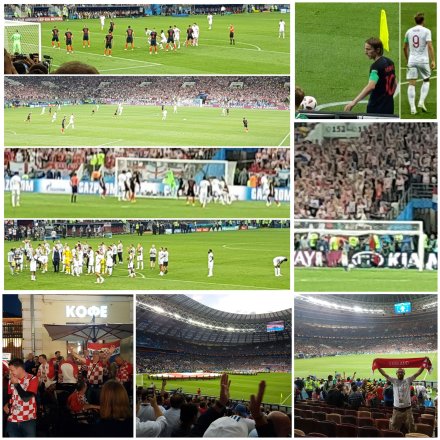
Watching England going all the way, although playing the third place play-off rather than the final meant it’s not coming home, was a great experience.

I enjoyed writing about it here and with photos & videos at www.instagram.com/arthurvirgo.

Going to Russia for World Cup 2018 meant I enjoyed the tournament in an international environment with people of all participating nations. I could see England play in person. Yet with less of my exposure filtered through media coverage, and travelling on my own, I spent less time watching it with other English people to share in a building sense of energy.

I also missed what I hear were masterful media performances from manager Gareth Southgate that did much to endear the Three Lions to England fans at home. As a young team shed much of the mental baggage acquired after disappointing displays and penalty shootout exits of recent tournaments, some fans I met spoke of how this was their first genuinely enjoyable tournament in a long time. Though the team exhibited familiar strengths, and, ultimately, weaknesses, it did so with a lesser cast than that of the ‘Golden Generation‘, and one that offers promise of more enjoyable tournaments in the future.

A late 2-1 win against Tunisia followed by a more convincing 6-1 win against Panama led, via a defeat to Belgium of minimal significance, to England’s first penalty shoot-out win in over 20 years after a last-16 tie against Colombia had threatened to descend into heartbreak with their last-minute equaliser. It did not, as with a positive substitution of an attacker for a defender Southgate successfully restored some of confidence exhibited earlier against an obdurate Colombia side to reap the fruit of his dedicated psychological work on penalties with the players.

Though Colombia had been shorn of star player James Rodriguez, and though our 2-0 quarter-final win against Sweden looked more comfortable than it could have been had Pickford not made two impressive saves, much momentum had been accumulated in support.

I had seen few England supporters in the Spartak Stadium in Moscow against Colombia, but far more appeared in Samara to watch our passage to the semi-final. Some reproached how the improved support arriving on inbound flights came at the expense of potentially raising competition for tickets among more committed supporters who had purchased tickets throughout the team’s journey there. But the mood was buoyant and England fans were a big presence around the town centre, celebrating into the evening the team’s furthest tournament advance in decades.

Back home, #ItsComingHome became a meme less and less characterised by irony. Friends reported seeing falls from bus stops outside packed stations while family members who did not normally follow football were noting how tense England’s win over Colombia was amid the repeated rows between players trying to influence the referee, or how powerful Maguire’s header was against Sweden. The swell of support will have reached a peak during England’s thrilling opening to the semi-final against Croatia.

Trippier’s free-kick hit the back of the net against Croatia before the Three Lions had two more clear chances – one saved by Daniel Subasic, one missed by Jesse Lingard – as repeated direct attacks led by the pace of Sterling threatened to overwhelm Croatia. But as the pace of the game began to drop Croatia began to settle.

I was pleased England made it to half time, and hoped that the team might improve after the break. Southgate, having witnessed Eriksson’s uninspiring half-time team talk against Brazil in World Cup 2002, might be well placed to improve on it. Unfortunately however, Croatia were the side that improved and rapidly began to apply what seemed an unsustainable level of pressure.

Luka Modric continued to earn his player of the tournament award knitting together a side that effectively combined his fellow passing midfielders Ivan Rakitic and Marcelo Brozovic with the pace and skill of Ivan Perisic on the left flank and the power of Ante Rebic on the right flanking central striker Mario Mandzukic.

Right-back Sime Vrsaljko became increasingly influential, and defied rumours of injury to showcase his athleticism, alongside crossing ability reminiscent of his predecessor Darijo Srna. After receiving a quickly delivered diagonal pass from Rakitic, he crossed for Perisic whose high foot connected ahead of Kyle Walker to place the ball in the bottom corner.

Croatia continued to take charge and move the ball quickly from side to side, and on far too many occasions England’s defence were required to clear a ball into the box under pressure. Deep into extra-time they eventually failed, and Mandzukic’s finish spare the Three Lions what would have been an arguably undeserved penalty shoot-out against Subasic and his fearsome record at spot kicks.

Croatia fans I spoke to after the game had high praise for the effort of their whole team including left-back Ivan Strinic ‘who is normally sh*t’, and centre-back Dejan Lovren who had faced severe pressure early on in the match ‘Why are the English media always sh*tting on him – he has not done any mistakes I have seen all tournament!’. Fellow centre-back Domagoj Vida had withstood the additional test of facing repeated booing from Russian fans responding to comments he made about Ukraine in a video posted online.

Raheem Sterling had been vibrant in the early stages but Croatia had improved, and in the second-half he no longer looked capable of single-handedly posing the same threat on the counter-attack he once did. Southgate’s attempt at replacing him in a like-for-like substitution with Marcus Rashford was unsuccessful and England struggle to build moves on transitions deepened.

Southgate’s change was delayed and, given that despite the circumstances it did not attempt to either change the game’s pattern, or defend the flanks better by moving a forward out wide, arguably disappointing. I spoke to some England fans who felt he shared the blame with players who appeared content to reach the semi-finals rather than push for the final.

I am more sympathetic. The first-half’s goal, and the further chances that followed, indicated our potential to succeed. But ultimately I feel our dominant spell came too early for the team to adequately retain focus on the need to counter-attack well on the increasingly rare occasions when the ball was won.

Southgate had planned for an unusual 5-3-2 formation to make use of the abilities of the players available. Sterling’s dribbling skill and the finishing ability of Lingard and Dele Alli could be combined around the tournament’s top goalscorer Harry Kane in attacking situations. Pace throughout the side would help the team counter-attack on transitions to win set pieces, which had been identified as a particular strength owing to the delivery of Trippier and the aerial power honed in the Premier League of the likes of Maguire. Using only one wing-back on each flank for width, with other players more central and reinforced by using three centre-backs, would help move the ball across the pitch would help the team build attacks. The aim would be to effectively compensate for the comparative absence of midfielders with the creative and technical abilities to retain possession and control matches.

When this approach began to fail against Croatia, and belief in our ability to counter-attack with two strikers supported by two attacking midfielders became wishful thinking, I suspect no alternatives were attempted because no plan B had been prepared. I had heard from friends of members of the England camp as well as in the media of the efforts made to foster a positive environment in their training camp characterised by teamwork. Motivational infographics about the England team accompanied furniture designed to encourage players to sit together, with a non-alcoholic smoothie bar containing a cornucopia of ingredients for mental stimulation and to encourage creativity.

After what appeared an appalling mental collapse in Euro 2016, I can sympathise with Southgate focusing all the team’s efforts on making their new formation work as best as it could. Earlier in the tournament against Colombia, it also appeared to have been counter-productive to substitute Dele for the more defensive Eric Dier with the aim of playing more cautiously to maintain a lead.

Sadly, this inflexibility may also have reflected a lack of depth and a drop in quality between the starting XI, and players on the bench that Southgate felt unlikely to change the game enough to warrant the withdrawal of a more proven attacking weapon. Fans near me had called for the introduction of Ruben Loftus-Cheek, or Fabian Delph, with the aim of better retaining possession in midfield. But Delph played left-back last season, while Loftus-Cheek’s impressive display in an international friendly obscures his limited top-flight experience, largely in a direct Crystal Palace side and often out wide.

Losing control of games due to lack of quality in midfield has been a theme of the England team before, and a critical perspective could note our successes came only against lower-ranked teams and a Colombia side shorn of their star-player. But luck of the draw plays a big role in tournaments, and learning we can reach the semi-finals despite supposed weaknesses is a lesson we need to learn – and much of a young team may yet improve. Excessive pressure has allowed focus to be diverted from simply competing in matches too often. Southgate has shown us how to manage that hype, and finally led us to victory in a penalty shoot-out.

As I was told a fixture chart on the wall of the England camp said next to the World Cup knockout stages, there is “no limit on what we can achieve”.
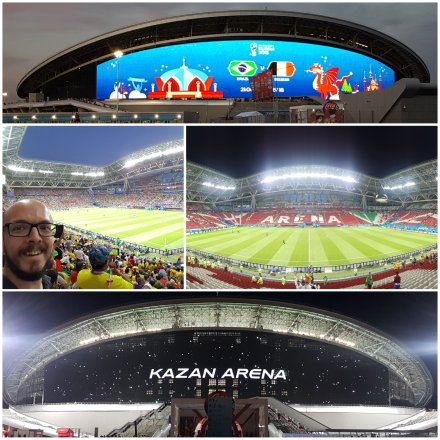
Brazil 1-2 Belgium: First goal was crucial despite spirited fightback after Martinez’s side took control

So glad to watch such a high quality quarter-final between two sides reasonably seen as potential World Cup 2018 winners. My thoughts on full-time whistle also available at

https://m.facebook.com/story.php?story_fbid=10102834843567930&id=36921408

Brazil had opportunities but in key moments fortune favoured Belgium who took advantage of an own goal from a corner to build what proved an unassailable lead before half-time, despite a spirited second half fight-back.

Brasileros I spoke to before the game thought first goal crucial & it could have come at the opposite end, with a goalmouth scramble ensuing after a corner had been turned onto the near post.

But once they took the lead Roberto Martinez’s side looked increasingly comfortable in a smart layout that inhibited the opposition’s attacks on both flanks by placing Romelu Lukaku & Eden Hazard on the right & left side of playmaker Kevin de Bruyne respectively. Nacer Chadli dropped well into midfield following his previous appearance on the flanks, to make the side more solid in the centre of the pitch.

Neymar, who succeeded in winning a string of free-kicks, Philippe Coutinho & Marcelo from left-back intimidated defenders into standing off their opponents and allowing them space to dribble, look for shots, and cross respectively. But they themselves lacked support from teammates, inhibited by the lurking presence of Lukaku, whose pace & power only Miranda looked able to contain, in the absence of Casemiro.

Red Devils have been ponderous in possession in the past but their methodical style on the ball has been reflected in consistently incisive counter-attacks. As their last minute goal to defeat Japan came from an opposition corner, so did their clinical second goal. Lukaku received the clearance and began an unstoppable run to the other end of the pitch before passing neatly to de Bruyne whose finish was powerful and accurate.

Although I had feared there was more potential for a thrashing than a comeback, Tite made excellent substitutions after the break to put the leaders under increasing pressure. Pace on the right-flank from Douglas Costa stretched the pitch better creating space for teammates, & forced Jan Vertonghen & others supporting Hazard onto the back foot.

Apart from Marouane Fellaini who pressed effectively, and Vincent Kompany on occasion, when not in possession their defence appeared to show a preference for containing the attack and preparing to counter-attack, with Axel Witsel always seeming to give a surfeit of numbers and sure touch when required. But into the second half they no longer seemed poised to counter & looked less capable of containing the increasing pressure.

A clever run from Renato Augusto was not picked up & he pulled a goal back with a neat header, with Axel Witsel & Kompany appearing to blame each other. Another clever run of his ended with a shot he dragged wide, & Thomas Vermaelen was brought on to act as another centre-back.

Substitute Roberto Firmino struck a shot on-the-turn from close range wide, and a Coutinho forced Thibaut Courtois into a good save.

Another of Brazil’s efforts could very well have equalised. But it was not to be, and now in the semi-final the Belgium Golden Generation have a chance to fulfil their potential with the ultimate trophy.

Spain 1-1 (3-4) Russia: Akinfeev helps hosts’ heroes defeat Hierro’s side on penalties

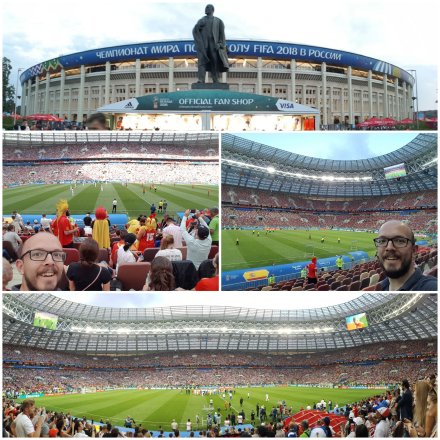
I didn’t meet a fan who thought the host nation could progress but it was a fantastic experience to see RussiađŸ‡·đŸ‡ș hold and then defeat SpainđŸ‡Ș🇾 on penalties in front of such a cheerful and positive home crowd at the Luzhniki Stadium in Moscow.

Igor Akinfeev has made reduntant any previous mistakes for the national team and his heroic saves gave a reward to his teammates’ for their careful defending against the 2010 world champions.

Sergio Ramos was amazing to watch at centre back because of his visibly high level of confidence in launching with great speed and power into challenges, whether having to cover ground first, or in close contact – including with vastly experienced defender Sergei Ignashevich to force home his side’s opening goal. He had similarly handled the much larger Artem Dzyuba operating as a target man, but the giant centre forward unsettled his centre back partner Gerard Pique into blocking his header with a handball resulting in a penalty, which he converted.

With a more conservative right-back in Nacho (initially) alongside left-back Jordi Alba and central midfield duo of Sergio Busquets and Koke comfortably providing a platform for possession, manager Fernando Hierro appeared to restrain any nerves and said little from the touchline. Stanislav Cherchesov was more agitated in engaging the crowd and urging his side to offer enough in attack to inhibit the favourites, and generate further set pieces to trouble their opponents.

The home side made substitutions earlier and their physical exertion was clear with the contrast at full time between the focus on the efforts of their physios to assist their players’ physical recovery to stay in the game during extra time, and the favourites’ talk on how they would crack the tiring opposition defence.

They had been unable to do so in ninety minutes, and Diego Costa had been substituted having had little space to operate in with his opponents so deep. However, they had began the process with introduction of Andres Iniesta who almost managed it with some moments of great poise and incision, in particular his well-directed shot forcing an astonishing save from a fully outstretched Akinfeev.

Starting the match with Marco Asensio offering more width instead to accompany playmakers Isco and David Silva had not appeared unwise initially. But in what proved his last appearance before his international retirement from La Furia Roja the Barcelona legend showed how much more effective he is at unlocking packed defences. He identified either incisive passes or darting runs with & without the ball, or moved the ball on when no opportunity presented itself, and crucially did so quickly & without telegraphing his plans – unlike his fellow playmakers with more of a preference for dribbling with their preferred foot.

The shock sacking of Julen Lopetegui before the tournament had not appeared to affect the side too severely based on their resilient opening performance against Portugal. But subsequent performances against Iran and Morocco indicated a reluctance to use with conviction their variety of attacking options to overwhelm opponents. Neither did they control possession so thoroughly that the opposition were unable to pose a threat to their defence, as the 2010 side did.

The hosts’ penalty resulting from one of their set pieces and an exit on penalties is a harsh punishment for such indecision. But World Cup 2018 as a whole benefits from the presence of the host nation, and the constant reminder that the favourites can be defeated.

Serbia 1-2 Switzerland: Xhaka & Shaqiri boldly celebrate excellent performances

Ahead of the World Cup I had in mind explanations of how early stages of tournaments can disappoint because teams do not have the time to develop a playing style that elite club sides do, even if talented players are available.​ Fortunately I did not see this happen as Serbia and Switzerland played an engaging game of high quality ​in which the high profile players I had seen on TV showed their qualities or exceeded my expectations.​

The historical background of Balkan conflict had seen the game described as a grudge match for many of the players involved​ and was also reflected in Russian fans’ support for Serbia.​ Walking to the ground I had heard ‘ŃĐ”Ń€Đ±ĐžŃ, Ń€ĐŸŃŃĐžŃ – Đ±Ń€Đ°Ń‚ŃŒŃ ĐœĐ°ĐČсДгЎа!’ ‘Serbia, Russia – brothers forever!’​ As the game started Serbia threatened to overwhelm Switzerland as chants of ‘ŃĐ”Ń€Đ±ĐžŃ, Ń€ĐŸŃŃĐžŃ’, later responded to with more openly militaristic English language chants of ‘Serbia, lost the war’,​ provided them with an atmosphere to give them what felt like a home side’s advantage.​

Nemanja Matic provided composure in possession to accompany the intense pressure he provided with fellow midfielders​ Luka Milivojevic, who made some well-timed tackles, and Sergej Milinkovic-Savic, who frequently became an auxiliary forward,​ and Switzerland struggled to get out of their own half.​ Dusan Tadic had assisted many of Serbia’s goals in qualifying and although he received the ball on few occasions,​ when he did it was often high up the pitch on the right flank, and he combined with powerful striker Alexandar Mitrovic. He first worked some space to lay the ball back to right-back Branislav Ivanovic who delivered a dangerous cross from which Mitrovic’s header​ back across goal forced an excellent save from Yann Sommer.​ Moments later Tadic himself checked back onto his favoured left foot and chipped a cross from which Mitrovic again won an aerial duel well into the Swiss penalty area and directed a header to the far post to give his side the lead.​

Switzerland were unable to sustain attacks as they had tried to pass the ball through midfield to Xherdan Shaqiri, ​whose every touch was met with boos.​ I had been told in the queue before the game that this Swiss side was the best in recent memory, ​and many of the players had won international youth competitions together, and they showed self-belief and composure to grow into the game after the tempo began to drop after Serbia’s fine start.​ Centre-back Fabian Schar and midfielder Granit Xhaka took responsibility on the ball and passed neatly through the lines ​to find the increasingly influential Shaqiri as he drifted into midfield from the right flank,​ while fellow midfielder Blerim Dzemaili, right-back Stephan Lichsteiner, and Steven Zuber on the left flank ​showed great energy through their frequent runs to offer space to others.​

Left-back Ricardo Rodriguez chose his moments to advance forward into dangerous crosses with good effect,​ while Valon Behrami covered a lot of ground and made sure he was around to cover others when they advanced forward.​ Yann Sommer showed great bravery in goal to pass the ball out from defence through Manuel Akanji and Schar as his side began to enjoy more possession.​ Serbia’s three midfielders were all given yellow cards as their attempts to win the ball back became more speculative​.

Forward Haris Seferovic, who stayed down after a heavy challenge in the first half, went off at half time for Mario Gavranovic, ​and shortly after the interval Switzerland equalised.​ Xhaka was frequently required to retain the ball under pressure, and this time after evading challenges from opponents closing him down, ​he instigated an attack which ended with his powerful strike returning a hurried clearance beyond the Serbia goalkeeper’s reach.​ He celebrated with the Switzerland away fans and the ‘double-eagle’ gesture recalling the two-headed eagle of the Albania flag, ​and along with his team appeared to be satisifed with a draw as they became less enterprising as the match went on.​

Shaqiri however continued to make use of the freedom he was given to attack, and could be justified in raising his wage demands in negotiations with clubs willing to meet Stoke’s bargain ÂŁ12million buyout clause. He combined a performance characterised by consistent effort ​and neat technique to combine with teammates in tight spaces with moments of ambition, one such curling long shot grazing the corner of the goal.​ Serbia began to push forward later on in the match in search of a winning goal to leave them less dependent on points against Brazil – ​one of their fans I spoke to believed they lack the pace to threaten on the counter-attack in such a match.​ When they did so they left more space for their centre-backs to defend, and Dusko Tosic’s failure to intercept a through ball allowed ​Shaqiri to collect the ball on the left of the halfway line before showing great pace and composure so late in the match to run through on goal​ and roll a calm finish to the left of the goalkeeper and into the corner of the net.​

He was booked after removing his shirt in a celebration again, controversially now the goal would be decisive, featuring the ‘double eagle’, and drinks were thrown from the crowd in frustration as dozens began to leave the ground in despair. Nevertheless, the friendly atmosphere created by cheerful fans of each side in national dress before the game seemed preserved afterwards,​ as the Swiss fans celebrated with bright flags and chants of ‘Schweizer Nati’ untroubled.​

The Russian stewards have appeared well organised to prevent any problems if called upon – ​one fan I saw posing for selfies covering his face with a black cloth with a snarling dog on it (I could not identify the affiliation) was calmly dissuaded from wearing it by a steward, and​ the boisterous Australian fans conducting a crowd from a high seat after their draw against Denmark were neatly contained as other fans were directed out – but the atmosphere justifies the belief that this World Cup can be a festival in which football can be the winner.

The beauty is in the Struggle: A review of Euro 2016

‘Goals are Overrated, the Beauty is in the Struggle’ is the phrase that to me sums up the universal appeal of football, a sport in which few points are scored enabling upsets by less fancied teams. Yet its alleged author argued that the European Championship to 24 teams meant threat levels were lower until the final knockout rounds. There were fewer dead matches in qualifying and in the tournament group stages because teams had enough chances to recover from defeats, although Holland still failed.

It could be argued that rewarding defensive teams that collect draws and avoid heavy defeats with progress encouraged negativity, and that the increased number of matches gave more chances for injuries and suspensions to take their toll on sides, thus helping endurance and caution triumph over quality. But if a tournament is a supposed to be marathon not a sprint, the format may have guided Cristiano Ronaldo to another way of winning beyond his trademark running speed.

He has tried to translate his natural game at club level to the Portugal national team before but was never rewarded with glory. This time, Fernando Santos judged that a focus on counter-attacking and being defensively organised would be wise for Portugal given the abundance of quick attacking midfielders and lack of centre-forwards. Perhaps this is better at international football in general.

Ronaldo throughout was forced to participate too in leading his national team, now humbled in accordance with his wishes. He could not lead his cavalry to overwhelm the opposition in an irresistable charge of sexy football as he does in the shining and brilliant while of Real Madrid. Instead he showed necessary anger at defensive standards slipping, motivated his teammates for their penalties, and used his individual ability to crack their semi-final opponents before making his team kill the game after. Finally when he could no longer fight the injury that kept him from the final, he helped cajole Raphael Guerreiro back on pitch, and told Eder he would score the winner.

In fact, game intelligence was shown collectively through the use of a squad of players. Goalkeeper Rui Patricio is a consistent one club man who in his fourth tournament excelled in the final to save from Griezmann and Giroud and give confidence to his defence from the back. Experienced centre-backs Pepe, Jose Fonte, Bruno Alves, and Ricardo Carvalho were collected into the fold to be guiding influences on a side that depended deep. Although Pepe continued to show his mastery of the dark art of gamesmanship, Fonte was exemplary in replacing the 37-year-old Carvalho.

More attacking converted wingers Vieirinha & Eliseu contributed in qualifying but were later replaced by side backs Cedric & Raphael Guerreiro, who showed good crossing from advanced positions. Holding midfielders William Carvalho & Danilo were reliable when called upon, and coped well with being moved in and out of the team.

Joao Mario, Andre Gomes, Adrien Silva, Renato Sanches, Joao Moutinho, Rafa Silva and were the technical and clever midfielders that collectively allowed the wingers to fill in for Portugal’s missing pieces at centre forward. Some were used well at particular times, such as Renato in scoring against Poland, but others consistently excelled, such as Joao Mario who ended the tournament by showing great game intelligence on counter in final. Wingers Nani & Quaresma got to play in more free roles rather than being shoehorned into a side with a number 9 forced into it – each adapted well, with Nani scoring 3.

Centre forward Eder was largely unused of late, fell hard after an aerial challenge, but got back up again before hitting the tournament winner from range. It was the stuff dreams are made of, and for him game intelligence was knowing that it could only take a moment for a striker to make history at the expense of another popular opponent who enjoyed the support of many neutrals.

Their knockout opponents each showed collective quality, organisation and individual talent, although the further Portugal went in the tournament, the more their opponents were tagged the underdogs. But Portugal eliminated Croatia’s attacking quality on the counter for a late goal in extra time, then organised Poland on penalties after a bright start to the match relapsed into a tight game. Next came a Wales side shorn of suspended playmaker Ramsey but boasting Ronaldo’s apprentice Gareth Bale on the counter-attack, when the preening master finally showed his individual quality.

Like the star of the Game of Thrones best-selling books sharing a dragon emblem, Portugal were the slayer of lies that teams get what they deserve. Too many teams are deserving for that, and competition is fascinating because teams have the means of avoiding what they ‘deserve’. It’s an uncertain struggle, and there’s beauty in it.

Here are some impressions I got of the 24 teams in the tournament… Continue reading

UK General Election 2015

Some thoughts of mine after doing some campaigning for the Conservatives ahead of the UK’s general election in the constituencies of South Thanet, Harrow East, Telford and Ludlow, where the candidate I supported was announced as the Member of Parliament in the early hours of Friday morning following the Counting of votes cast.

What people say in polls doesn’t predict their vote.

Prediction is very difficult, especially about the future. Previous analysis about possibilities for different Coalitions seems like it never happened – it’s a Conservative majority now. It doesn’t seem like polls predicted the result of the election well, and it reminded me of an event I went to at Parliament where some academics presented research about polls data. Apparently voting intent expressed by those polled is a worse predictor of their vote than their actual past voting behaviour. Because of that, even if all polls say the same thing at once they can be misleading.

The rapid emergence of UKIP and lack of a track record in elections perceived as important meant that it was hard to assess their levels of support. And there were even more fundamental problems in assessing the effect of UKIP on a Conservative-Labour contest because of how hard it was to tell where UKIP support came from. While the panel were content to assume that Green support often came from Liberal Democrat or Labour, they were unwilling to affirm a suspicion that UKIP were draining Conservative support in marginal seats. Those presenting confidently predicted an SNP landslide in Scotland however because they could combine consistently strong and increasing levels of SNP support as mentioned in polls, with the knowledge that 45% of Scotland voted for independence in the referendum.

Lynton Crosby is the Wizard of Oz who gave 1992-style shy Tories the courage of their convictions in supporting their party.

I’m a largely pro-EU and often Guardian-reading Tory who doesn’t want to be negatively associated with stereotypes, but people of all opinions can be self-righteous and I think reluctance to discuss politics is more fundamental. I found people often didn’t seem to want to reveal their thoughts at random times to unannounced strangers on their doorstep or anywhere else. I don’t think many people are persuaded by direct argument at times like these. Instead I think people form opinions gradually and may feel undecided until they actually cast their vote. but parties can attempt to transmit messages, through both the press as well as by canvassing…

When I and others attempted to ‘canvass’ levels of support, the aim was to survey and improve the number of people considering voting Conservative in different areas. These surveys could be compared with publicly available data by area on the number of registered voters, turnout, and vote totals by candidate in various elections. Then, on election day, we tried to remind likely supporters to vote with the aim of recording a competitive tally at the ballot box.

South Thanet Conservative office at work

Parties want volunteer numbers and enthusiasm for this but what would help at an aggregated level is message discipline. Clear, repeated messages are much more easy to deliver effectively. And I also think that when attempting to canvass large numbers of households, a clear message makes it much easier to assess whether people have received your message or support your candidate. And in removing ‘barnacles on the boat’, UKIP could be robbed of sellable lines, and support could be bolstered among volunteers.

Even former Labour figures respect Crosby and his ability to develop a message capable of unifying members and being spread by volunteers on the doorstep. He brought far more than negative campaigning. Optimism from most Tories I met referred to the potential to win enough seats to form a minority goverment, and I don’t know anyone under 30 who suggested a majority could be achieved. Many more may head off to see this election strategist after the new addition to his list of election wins. 

Labour couldn’t portray the Coalition as extreme with left-of-centre Ed Miliband as leader.

If anyone really believed the Coalition programme was destroying the UK with austerity, naming Ed Miliband leader was history repeating itself, first as tragedy then as farce. The Milistone was a lot shorter than 1983’s longest suicide note in history, but once again the Labour Party portrayed the Conservatives in goverment as an extreme and destructive force while failing to propose a programme capable of appealing to enough voters to be able to undo its work. It seems Labour heavyweights are now acknowledging that their party paid dearly for their choice of leader and subsequent loss of centre-ground support available to Blair and Brown.

Negative headlines about Ed Miliband’s victory in Labour’s leadership contest appear justified, and four years into his leadership the party was punished for a 35% core vote strategy led by someone so easily portrayed as weird, Communist, his brother’s back-stabber etc. They did attract enough support to decimate Liberal Democrat party, but rather than winning seats this helped the Conservatives to a decisive victory. I believe deficit spending was and is the wrong programme for the UK government, but if this was part of the solution I would expect its supporters could agree to outline more of their plan with the public interest at heart. Otherwise why should voters believe such a plan exists in theory and can work in practice? If the left actually had an answer they should agree on what it is, not fall into disunity.

Now the Tories are putting European integration back onto their agenda, it’s just as well UKIP have been largely contained so far.

To wish Nigel Farage a happy retirement from work with UKIP

Wishing Nigel Farage a happy retirement from work with UKIP

David Cameron dislikes reshuffles and their potential to cause more trouble in excess of any benefit, so I expect a focus on implementation rather than new legislation in areas of reform under the Coalition like welfare, education and healthcare. I heard the art of running a government with no majority lies in narrowing the focus of legislation to specific areas more easy to bargain over. But the Conservatives have their first majority since 1992 and a commitment to negotiation with the European Union ahead of a referendum on membership. Then, their small majority in Government only served to underline internal divisions over Europe.

Now, the the Tories must face their differences over European policy, but at least they do so without already having been split by UKIP. After news of Nigel Farage’s impending defeat and resignation I heard the suggestion that their only sitting MP, Douglas Carswell was too professorial to maintain morale as their leader. If UKIP reject such libertarian supporters and appeal to the unpopular ‘bring-backery’ of some older Tories, the Conservative party will hope they can also be guided left towards opposition to Labour where the Conservatives are unpopular. And hamstrung by negative headlines and stereotypes of ex-BNP racists where the Tories are strong.

Does a decisive election invite a satisfying devolution settlement or the divorce of a broken union?

I spoke to a Tory supporter dismayed that without a Grand Coalition of Labour & Conservative, a hung Parliament would prompt demonisation of the SNP among the rUK and doom the Union. That hasn’t happened, and I also am not sure it’s fair to Scotland to describe the SNP as a party wanting to undermine the union, rather than the elected representatives of many people in Scotland.

An SNP controlled Scotland has a mandate for a ‘devo max‘ proposal, which they might prefer to a second referendum on independence (it didn’t work out so well for Quebec). Meanwhile a Conservative majority could force through ‘English Votes for English Laws‘ in the House of Commons. I don’t know much about the New Labour 1990s devolution agreement and any role it played in prompting interest in separating the United Kingdom. But I hope the SNP are willing commit to a deal over a federal settlement rather than work to provoke an acrimonious divorce.

The Liberal Democrat Party might be incapable of transitioning from Opposition to Government with any supporters left

Because I like Nick Clegg, I think it made for a good resignation speech to talk of noble work in the national interest. But I think the starting point for any soul-searching might be whether the party was ever capable of transitioning from opposition to government with any supporters left. A party comprised of people believing they vote for ‘None of the Above’ has no place in doing so.

If Lib Dems wanted a party to support Labour in government, they should support them from within rather than drain that support. If Lib Dems wanted to decline rare opportunities to enter a Coalition as they weren’t willing to coalign with the Conservatives, how could they be a moderating force of wisdom for either senior coalition partner. If its supporters want to be part of a radical progressive party of opposition concerned about the environment, why not merge with the Green Party?

The party only exists because of a previous merger between the Liberal Party and the Social Democratic Party, born of left disunity itself. If Nick Clegg really was a Tory in disguise, it seems the Party has already disbanded. In their manifesto the Lib Dems wanted to be a stabiliser to two-party dominance; they now look a spare wheel in a multi-party machine.

Premier League late moves before closure of transfer window

Following the closure of the transfer window on 1 September, I’ve reviewed the moves of each side in the Premier League in the rush before it shut.

ARSENAL
In: Danny Welbeck | Out: Ignasi Miquel 
Linked: Carlos Bacca, Loic Remy, William Carvalho, CB
Why: Giroud led the line for much of last season.
For his 2 months injured the Gunners could struggle to break packed defences without his power and link-up play.
Welbeck can cover as target man, offering much more pace in the role, but also play across the front line contributing defensively.
Once he returned, Bacca would have been less suited to a wide role, while Remy would have obstructed Theo Walcott’s development.
Chambers is backed to cover at centre-back and the Gunners are not anticipating a series of injuries in defence.
Arteta, Flamini, Wilshere, Ramsey are trusted in midfield even against the top sides.
Verdict: Arsenal showed a soft centre to Chelsea & Liverpool last year and got overwhelmed. The decision not to sign a defensive midfielder like Carvalho means that could happen again, but their strong attack should take the side to the Champions League.

ASTON VILLA
In: Carlos Sanchez, Tom Cleverley | Out: Karim El Ahmadi
Linked: Sergio Canales
Why: Gabriel Agbonlahor and Andreas Weimann have been backed in attack, despite the absence of injured target men Christian Benteke (& his replacement Jan Kozak) who complete their attacking trio last season.
Instead, Villa have reinforced cornerstone Ron Vlaar with 3 new defenders and powerful Columbian defensive midfielder Carlos Sanchez, as El Ahmadi left.
Alongside the energetic Fabian Delph in midfield, Cleverley would represent a potential upgrade on Ashley Westwood.
With Joe Cole yet to make an appearance, Canales was also linked as a potential creative arrival, but the returning Charles N’Zogbia and Kieran Richardson look set to provide pace and energy instead.
Verdict: Last season’s side lacked creativity in attack when the athleticism of their front trio proved insufficient to break down defences at home, but Villa look much more solid than last season’s youthful side. Cleverley’s move might help him get the game time to revive his career. Until Benteke returns it might be hard for them to stay in the top half however.

BURNLEY
In: Nathaniel Chalobah, George Boyd, Michael Keane
Linked: Russell Martin
Why: Chalobah can help control games in central midfield, Boyd can provide creativity on the flanks and in attack, Keane adds youth in central defence.
All are versatile and give depth to a thin squad, as Norwich defender Martin would have.
Verdict: Burnley played an attack-minded game last year but will have to be more cautious against superior opposition.
Danny Ings might not be able to net enough goals to keep them up as a result.

CHELSEA
In: Loic Remy | Out: Marco Van Ginkel, Fernando Torres
Why: Remy is quick, powerful and good in the air and can cover for Diego Costa.
He could also offer a direct option on both flanks and would compete with Andre Schurrle for this role.
Torres has disappointed and all concerned might be relieved his exit to AC Milan could be arranged.
Fabregas looks set to provide all the creativity required against packed defences.
Young defenders Tomas Kalas, Kurt Zouma and Nathan Ake are getting the chance to step up and cover in defence.
Verdict: Jose Mourinho’s side look fearsome, but I think they could have used a versatile and experienced defender like Alvaro Arbeloa as cover.

CRYSTAL PALACE
In: James McArthur, Kevin Doyle, Zeki Fryers, Andy Johnson | Out: Glenn Murray
Why: Kagisho Dikgacoi left in the summer and Joe Ledley’s fitness record has not matched Mile Jedinak’s.
Palace needed another central midfielder and the talented and energetic McArthur is a huge coup and perfect fit.
Fryers adds cover at centre-back and left-back.
Experienced strikers Doyle and Johnson could prove more content to appear from the bench than Murray, who has been without a regular first-team place since his knee injury just before the Eagles’ promotion.
Verdict: Squad looks fine now – I’m surprised a move for McArthur wasn’t made earlier.
Perhaps a more proven striker would offer more protection against ‘second season syndrome’.

EVERTON
In: Samuel Eto’o
Linked: Matija Nastasic, Tom Cleverley
Why: Without the injured Arouna Kone, the experienced Eto’o’s arrival offered cover for marquee signing Lukaku in the lone striker role.
But with centre-back Antolin Alcaraz and left-back Bryan Oviedo each injured, Nastasic would have provided depth and quality in possession in both positions.
Young playmaker Ross Barkley’s injury left a vacancy in midfield that could have given a new opportunity to Cleverley, but the return of Darron Gibson and arrival of Muhamed Besic gives Everton the cover they need in central midfield for Gareth Barry and James McCarthy.
Verdict: The Toffees have done well enough to maintain their starting XI over the summer transfer window, and should remain competitive. For England’s sake, it’s a shame Cleverley won’t get Roberto Martinez as his manager.

HULL
In: Michael Dawson, Mohamed Diame, Abel Hernandez, Gaston Ramirez, Hatem Ben Arfa | Out: Shane Long
Why: Striker Abel Hernandez can play instead of Jelavic as a lone striker, alongside him, or out wide and offers the pace to replace Shane Long.
Diame’s arrival adds athleticism in midfield alongside the anchoring Tom Huddlestone and will allow the rotation of Jake Livermore and David Meyler.
Playmaker Ramirez and dribbling wizard Ben Arfa each have the talent to launch attacks in place of the tireless Robert Snodgrass, now ruled out through injury.
Dawson adds experience and a range of passing that could help launch direct attacks.
Verdict: An awful disappointment to be eliminated so early from the Europa League, but the ability to focus could boost their league challenge.
It doesn’t look good for Tom Ince for Hernandez and Ben Arfa to arrive all at once – they both play in his positions, and Ramirez is further competition.

LEICESTER
In: Esteban Cambiasso, Nick Powell, Tom Lawrence
Linked: James McArthur
Why: Nigel Pearson’s 4-4-2 looks very organised but lacks top level experience and the ex-Inter Milan 2010 Treble winner will provide poise while the youthful Powell adds goal threat in central midfield.
Verdict: Winger Riyad Mahrez and striker Leonardo Ulloa have impressed so far against tough opposition. I think others like Anthony Knockaert and David Nugent will step up too.
Odd how Wigan manager Uwe Rosler implied it needed a Leicester bid for McArthur to force Cambiasso to accept the move. Implies desperation and I think there was a case for getting both.

LIVERPOOL
In: Mario Balotelli
Why: Not many players could step into the void left by Luis Suarez’s but Balotelli has the talent, pace and power to do it.
His arrival could test Brendan Rodgers’ capabilities as a man-manager, and the two strikers were polar opposites when comparing work rate, but he was a bargain at that price and Rodgers had already distributed the funds raised by Suarez’s sale across several areas of the pitch.
Verdict: Liverpool’s success last season was achieved without the distraction of European football, but their squad looks deep enough to cope with it now.

MANCHESTER CITY
Out: Alvaro Negredo
Linked: Radamel Falcao
Why: Financial Fair Play rules meant signing Falcao proved too challenging, and if Sergio Aguero stays fit City won’t need another elite forward.
Valencia offered a substantial amount of money for the currently injured Negredo and given the need to raise money for future signings, it proved too good to turn down.
Fernando immediately, and Eliaquim Mangala when he settles in, could each improve City’s defence and provide the foundation to challenge in Europe as well as in the league.
Verdict: Won last season’s Premier League despite a series of injuries, but Pellegrini will need to mould it into a more consistent XI to beat Mourinho’s Chelsea this time.

MANCHESTER UNITED
In: Radamel Falcao, Daley Blind | Out: Danny Welbeck, Javier Hernandez
Linked: Arturo Vidal, Mats Hummels, William Carvalho
Why: Manchester United have several problem positions, and Vidal’s athleticism could have seen them all filled, but the price required to extract him from Juventus proved too high given his age and that he is yet to demonstrate his fitness after being worn down last year.
Roma’s pursuit of Adrian Rabiot may imply United hope to sign Strootman to anchor CM anyway.
Blind offers improvements at centre-back, left-back and centre midfield, but won’t offer the same level of dynamism.
Falcao’s signing recalls the purchase of Robin Van Persie – a marquee signing of a striker with a brilliant track record.
Welbeck was versatile and Hernandez had finishing ability, but Arsenal and Real Madrid look set to offer them more prominent roles, and newly signed Angel Di Maria can provide the pace they had each offered the side in attack.
Verdict: ‘Why add gold plate to the Bentley when you need an engine…’ ‘Business at the front, party at the back…’
United’s defence don’t look set to support a challenge for the Champions League places, but Van Gaal sides have historically improved despite slow starts.
Selling Welbeck to a direct rival might prove unwise however.

NEWCASTLE
Out: Hatem Ben Arfa, Mapou Yanga-Mbiwa
Why: Remy Cabella, Nigel De Jong and Emmanuel Riviere were chosen to revitalise an attack that collapsed after the sale of Yohan Cabaye, with Ben Arfa long marginalised.
Yanga-Mbiwa didn’t seem to adapt to the Premier League and Roma look set to provide him with more game time.
Verdict: Time will tell whether their attack proves sufficient to bring the Magpies out of their end of season slump, though a loan move for Arsenal’s Joel Campbell could have given another option in attack, either as another striker or in a wide role.

QPR
In: Leroy Fer, Sandro, Niko Kranjcar
Linked: Lassana Diarra, Fabio Borini, Jermain Defoe
Why: QPR lost midfielder Alejandro Faurlin early in the season to injury, and Sandro’s power will help them control matches, as Diarra would have.
Losing Remy also meant QPR could have used a mobile striker to cover and complement Charlie Austin and the injury prone Bobby Zamora, but Redknapp can instead now choose from among the dynamic Fer and talented Kranjcar in a supporting role behind the striker, with Junior Hoilett and Matt Phillips providing pace from the flanks.
Verdict: Redknapp’s side look a little short in attack but could as long as he can keep his players motivated the Hoops should prove resilient enough to stay up.

SOUTHAMPTON
In: Sadio Mane, Toby Alderweireld, Florin Gardos | Out: Hooiveld
Linked: Diego Capel, Andros Townsend
Why: The winger offers searing pace to complement the aerial ability of Pelle and the creative Dusan Tadic, who replaced Lambert and Lallana respectively, but arrives as more of an unknown quantity than the more established Townsend and Diego Capel.
Quick centre-back Alderweireld arrives to replace the departed Dejan Lovren while Gardos replaces the equally tall Jos Hooiveld.
Verdict: Keeping a well-motivated Schneiderlin will make such a difference to the Saints, though the new manager will struggle to match last season’s 8th.

STOKE
In: Oussama Assaidi, Victor Moses
Linked: Wayne Redmond, Scott Sinclair
Why: Mark Hughes acted early in the window to bring in full-back Bardsley, central midfielder Sidwell, and now adds Moses and the returning Assaidi on the flanks to add cover across the squad. The talented Bojan arrived already to provide the technique to complement pacey dribblers Arnautovic and Odemwingie in attack.
Verdict: Mame Biram Diouf has added yet more pace and power to the Potters front line, and given Hughes’ side finished 9th last year despite a poor start, the Potters could look to contend for a European place.

SUNDERLAND
In: Will Buckley, Sebastian Coates, Ricky Alvarez | Out: Modibo Diakite
Linked: Fabio Borini
Why: Modibo Diakite’s contract was cancelled so he could return to Italy and Fiorentina, so the giant Coates arrives to provide cover for injury-prone Brown.
Talented Alvarez and powerful Buckley provide alternatives for Jordi Gomez in a creative role and Adam Johnson on the wing.
Fletcher has led the line despite struggling with injury last season and has the powerful Altidore and Wickham as back up, though retaining Borini after last year’s successful loan would have provided a mobile option.
Verdict: Poyet revived the Black Cats last year after a poor start under Paolo Di Canio, but much of their team is injury prone or inconsistent and his side could experience further set-backs this season.

SWANSEA
In: Federico Fernandez
Why: Without European football a bloated squad was not needed so of their many departures, arguably only Fernandez was need to replace Chico at centre-back.
Verdict: Gary Monk has got off to a perfect start and The Swans look set for a successful season, though Leon Britton is yet to return at centre midfield.
Celtic would have struggled to resist a move for Charlie Mulgrew, who would have offered physically along with technique in the middle of the park, as well as at centre-back or left-back.

TOTTENHAM
In: Benjamin Stambouli, Federico Fazio | Out: Michael Dawson, Sandro, Lewis Holtby
Linked: Danny Welbeck, Jay Rodriguez
Why: Spurs’ squad is too large to give all the players enough football to keep them happy, and White Hart Lane wasn’t big enough for both Etienne Capoue and Sandro, or for Holtby amid a surfeit of midfielders.
The Brazilian’s replacement Stambouli has a record of making a lot of interceptions which should make him suited to Pochettino’s pressing system, and he can also cover at full-back should the squad be further trimmed.
Dawson leaves to be replaced by the younger Fazio.
Welbeck could have provided competition to Adebayor up front and Chadli on the left, but losing out to Arsenal means a move for Pochettino’s former striker Rodriguez can still happen when he recovers from injury.
Verdict: Pochettino’s arrival gives reason to hope for stability and gradual improvement after last season’s discord,
though breaking past one of the incumbent top four will be difficult.

WEST BROM
In: Giorgios Samaras
Why: Alan Irvine earlier added variety in the full-back positions but spent the summer fortifying team’s core amid inconsistent form among the sides creative players.
The giant striker provides an alternative to Victor Anichebe in the target man role to help Brown Ideye and Saido Berahino score the goals.
Verdict: West Brom look short of goals and could do with more pace on the flanks. I think they’d have improved their survival chances with a move for Callum McManaman who would have provided work rate and both of these, and Wigan signed Andy Delort who could have replaced him.

WEST HAM
In: Alex Song, Morgan Amalfitano | Out: Mohamed Diame
Linked: Micah Richards
Why: Richards would have covered several positions and his powerful style would have added to West Ham’s threat from set pieces, but Carl Jenkinson was already signed at right back, while Song can either bring his passing range to midfield or cover centre-back.
Diame has looked set to leave for a while leaving West Ham looking for another option in central midfield.
With Downing & Jarvis each operating primarily as ‘inverted’ wingers, Amalfitano brings his fine right foot and dribbling ability to West Ham’s right flank.
Verdict: The Hammers invested too much in the injury prone Andy Carroll, and Enner Valencia has no experience in Europe, but Mauro Zarate could inspire a positive atmosphere at Hammers.

THE ENGLISH NATIONAL TEAM – DOES ENGLAND EXPECT?

AS GOOD AS IT GETS

A historic 5-1 win in 2001 over Germany in Munich began a phase where England seemed to improve year on year. Serie A-winning Sven-Goran Eriksson, the first foreign Three Lions manager, fielded centre-backs Sol Campbell and Rio Ferdinand, full-backs Gary Neville and Ashley Cole, midfielders Paul Scholes, Steven Gerrard and David Beckham, and that year’s Ballon d’Or winning striker Michael Owen as his side emphatically swept away memories of semi-final defeats on penalties to the eventual winners of World Cup 1990 and of Euro 1996 on home soil.

Despite injury problems the Three Lions reached the 2002 World Cup quarter-final before they beaten by eventual winners Brazil. Euro 2004 saw Ferdinand miss out through suspension but John Terry proved an able replacement, while midfielder Frank Lampard was added as Scholes moved out to the left. Teenage forward Wayne Rooney looked to complete the side but he limped off injured as host nations Portugal went on to win defeat England on penalties in their quarter-final.

Jose Mourinho then assembled a Chelsea title-winning side around a young English core of Terry and Lampard, while Steven Gerrard inspired Liverpool to a historic 2005 Champions League triumph, adding to a sense of pride in the Three Lions.

FEARFUL ‘GOLDEN’ GENERATION REPLACED BY YOUNGER LIONS

Forty years after lifting the World Cup on home soil, it seemed like the 2006 World Cup in Germany represented the moment for the ‘Golden Generation’ of players to capitalize on their talent. But amid a media circus of reporting on what their WAGs (Wives and Girlfriends) were up to, the Three Lions struggled under the pressure.

Things then went wrong when first Michael Owen was lost to serious injury and then Rooney, who had been rushed back from injury and left short of full fitness before being asked to step in as a lone striker, let his frustration get the better of him and he was sent off in a quarter-final where Portugal were again victorious on penalties. Owen Hargreaves was the only positive from the tournament, but the energetic midfielder failed to star for the national team again after injury problems.

Assistant manager Steve McLaren took charge but flopped and his team missed out on qualification for Euro 2008 as a fear of failing to live up to expectation took hold. The FA hoped legendary manager Fabio Capello could make the most of the players at his disposal, but like at the previous World Cup the Three Lions looked tame and were humbled 4-1 by Germany in the round-of-16. He qualified the side for Euro 2012 but his resignation following the FA’s decision to strip the captaincy from John Terry, coupled with the FA’s lengthy search for a replacement, meant a new manager had so little time in charge before Euro 2012 it seemed time to admit that the dream was over.

Following his appointment Roy Hodgson installed a pragmatic 4-4-2 that saw new faces such as Joe Hart, James Milner, and Danny Welbeck complement an experienced core of Cole, Terry, Gerrard and Rooney to go out at the quarter-final stage on penalties to Italy, who then knocked out the fearsome Germany to reach the final. But that set the stage for the likes of Andros Townsend, now ruled out by injury, and Daniel Sturridge to begin to lift the culture of fear that had dominated of late during qualification for World Cup 2014 in Brazil, where the Three Lions will compete as underdogs.

England: Tactics and Players

HODGSON’S CHOICE

Joe Hart is a vocal and confident presence in goal, and at club level his Manchester City side conceded the fewest goals in the Premier League in each of the last three seasons. Despite briefly being dropped after a run of poor form earlier this season, Euro 2012 gave him the tournament experience that alternatives Fraser Forster and Ben Foster lack, and at just 27-years-old he has time to improve even further.

DEFENCE: LACK OF DEPTH

The Three Lions no longer have the fearsome strength in depth at centre-back that they once did. However Gary Cahill has both pace and aerial ability, and has already amassed considerable experience having won the 2012 Champions League before this season forming a settled centre-back partnership this season with retired former England captain John Terry. Phil Jagielka has been consistent at club level and has had time to form a settled centre-back partnership with him during qualification. However the Three Lions lack suitable cover in this area because, although Phil Jones and Chris Smalling each have potential, neither has received the extended run of games they need to develop in the position.

At full-back, Leighton Baines has been consistently excellent in attack for Everton over the last few seasons and provides valuable width going forward on the left flank. But Ashley Cole offers more solidity at the back where his vast defensive experience could prove more valuable if England come under sustained pressure, despite loss of his place at club level. A similar decision will be taken at right-back between the athleticism of Kyle Walker and the more experienced Glen Johnson, who may be less likely to get caught out of position high up the pitch.

Liverpool manager Brendan Rodgers has helped provide a potential midfield partnership by moving Steven Gerrard towards a deeper role in midfield. There, what he has lost in pace can be compensated for with experience where he sits in front of his defence and makes use of his excellent passing range. At the Reds he is joined by the athletic Jordan Henderson in a successful club combination that Hodgson tried in this year’s friendly against Denmark alongside the hugely talented but injury-prone Jack Wilshere. From the bench, Michael Carrick and Tom Cleverley offer passing ability, James Milner stamina and versatility, while young talents Ross Barkley or Alex Oxlade-Chamberlain contribute creativity.

ATTACK: CREATIVITY OR COUNTER-ATTACK

In his side’s last two qualifiers Roy Hodgson fielded talisman Wayne Rooney in a deeper role behind the striker Daniel Sturridge following his sensational goalscoring form, with versatile Danny Welbeck on the left of attack. Theo Walcott’s injury-induced absence means Hodgson cannot use his extreme pace on right flank, but Welbeck offers a fearsome combination of power and pace in his place to threaten on the counter. Left-sided Andros Townsend impressed on the right flank, and although he has failed to continue that strong form throughout the season, like fellow winger Raheem Sterling his dribbling ability could provide a useful option.

Hodgson could opt to bring in a third midfielder to help control games, but if he wants more creativity, Southampton’s two-footed playmaker Adam Lallana has been the most convincing option. Club teammate Rickie Lambert’s clever link-up play could see him chosen, despite his lack of pace, in a target-man role ahead of Andy Carroll who has struggled for fitness.

GOALKEEPER

Joe Hart
An unused member of the last World Cup squad in South Africa, he has commanded the jersey ever since, though he was dropped by City manager Manuel Pellegrini for seven matches season after his decision making was criticized following a high profile mix-up with a defender cause the side’s in defeat away at Chelsea.

Fraser Forster
The Celtic giant stands over two meters tall and has impressed on occasion in the Champions League, particularly in a memorable home win over Barcelona last season, but the Scottish champions’ dominance of the Scottish Premier League in the absence of Rangers means he faces little domestic challenge.

Ben Foster
Left out of the squad for the last World Cup, he played for the Three Lions last year for the first time since making himself unavailable for selection in 2011. At Birmingham City that year he won a third consecutive League Cup final, having won the trophy in the two preceding years with Manchester United.

DEFENCE

Gary Cahill
The centre-back played in both the 2012 Champions League and 2013 Europa League finals with Chelsea, where he partners former England captain John Terry. He also poses a substantial goal threat from corners and set pieces, and has scored ten goals for the Blues since joining them in January 2012.

Phil Jones
Since moving to Old Trafford from Blackburn at 19, his power, stamina and versatility have seen him feature in the centre and on the right of defence, in central midfield, as well as in specialist man-marking roles. Despite stating he wishes to play centre-back, he has yet to settle on a position for club or country.

Chris Smalling
The tall centre-back has pace as well as technical ability and aerial power, but he has struggled to displace the experienced Rio Ferdinand and Nemanja Vidic at club level. Like his United teammate Phil Jones, he has been played at both the centre and right of defence for both club and country.

Ashley Cole
The left-back has made over 100 Three Lions appearances, winning two league titles with Arsenal in an attack-minded role before becoming more defensively accomplished after a move to Chelsea, where he added the 2012 Champions League. However, the loss of his starting place this season has weakened his claim to the England spot.

Leighton Baines
The 29-year-old’s contribution from left-back was a key feature of the Toffees’ attack under both managers David Moyes and Roberto Martinez, and he has now struck 27 goals for his club. Possessing excellent passing and set piece ability with his left-foot, he played more qualifying matches than Ashley Cole and could retain the slot at the World Cup.

Kyle Walker
The attacking right-back possesses intimidating pace, power and stamina, but his desire to influence the game higher up the pitch can see him caught out of position defensively. His season has been disrupted by injury of late, and he faces pressure for the slot from the more experienced Glen Johnson.

MIDFIELD

Michael Carrick
The playmaker won the 2008 Champions League but under Fabio Capello he travelled unused to the 2010 World Cup and was then absent for a two-years until new manager Roy Hodgson took charge, later revealed that the midfielder did not want to be ‘on the subs bench’. Carrick has since returned to play in six of the Three Lions’ qualifiers.

Steven Gerrard
The legendary 2005 Champions League-winning Liverpool captain’s swashbuckling club form saw him deployed all over midfield, but success eluded him at international level. Now Three Lions captain, he looks to his passing range rather than his former athleticism to influence games from a deep-lying role.

Alex Oxlade-Chamberlain
The pacey, two-footed attacker featured at Euro 2012 aged just 18-years-old, and his dribbling ability in central areas or on either flank make him a useful option in attack. Like injured Theo Walcott, Arsene Wenger signed him from Southampton but ‘the Ox’ has more power and a superior passing range.

Ross Barkley
The tall, young midfielder has grown in confidence under manager Roberto Martinez over the course of a successful Premier League campaign with Everton, and his dribbling ability in central areas could prove useful from the bench, while he also possesses a powerful shot with either foot.

Adam Lallana
The agile Saints playmaker can pass and shoot with either foot and despite having only one full season’s experience in the Premier League could make the starting XI. He carried his excellent club form into a substitute friendly appearance against Denmark, where his precise cross set up Daniel Sturridge for the only goal.

James Milner
The versatile midfielder has excellent stamina and his ability to threaten on the counter combined with his defensive awareness makes him a valuable option on either flank. He has also played in central midfield, where impressive displays in his final season at Aston Villa earned him his move to City.

Jack Wilshere
The left-footed playmaker made his Three Lions debut aged 19 in an impressive first full season with the Gunners, but he missed all of 2011-12 through injury and has faced further fitness issues since. If fit for his first major tournament however, he offers competitive tackling as well as great technical ability.

Andros Townsend
The winger debuted in the crucial penultimate qualifying game at home to Montenegro, when he helped set up Wayne Rooney’s opening goal before his long range strike got the third in a 4-1 win. Left sided but confident using either foot, he excels at carrying the ball forward from deep positions on the right flank.

Raheem Sterling
The 19-year-old winger has pace and dribbling ability on the flanks, and he has improved rapidly under manager Brendan Rodgers with his heightened awareness seeing him drift across the Reds’ front line to increase his goal tally. He impressed after starting the Three Lions’ recent friendly against Denmark and could prove a useful option from the bench.

ATTACK

Wayne Rooney
The talismanic forward netted seven in his six qualifiers, though he has failed to score at his last two World Cups after struggling for fitness and form on each occasion. Hodgson could opt to use his passing ability in a withdrawn or wide role alongside another striker, but he has previously played up front on his own.

Daniel Sturridge
After leaving Chelsea for the Reds in January 2013, the left-footed striker finally occupied a starting place and excelled alone, or partnered by Group D opponent Luis Suarez, to net over 20 goals in the next season. He started the final two England qualifying matches up front, adding pace and directness to their attack.

Danny Welbeck
The versatile forward scored four goals in his eight qualifying matches and has an improving goalscoring record for United, while his intelligence, pace, height and link-up play are very useful on the counter if his side come under sustained pressure. He played on the left side of the Three Lions’ attack in their final two qualifying matches.

OTHER CANDIDATES

Phil Jagielka
The 31-year-old was centre-back Gary Cahill’s regular partner during World Cup qualification after he was rewarded for his consistent displays at club level which had long been overlooked for the national team. While he formed part of the Euro 2012 squad with teammate Leighton Baines, neither played.

Glen Johnson
The Reds’ right-back suffered from injury at the start of the season with the younger Kyle Walker taking his place in the national team, but he has now returned. The 29-year-old offers more experience in the role, with his ability to pass and shoot with either foot offering more variety in attack.

Luke Shaw
The attack-minded teenager offers power as well as pace from left-back, producing a resemblance to fellow Southampton academy product Gareth Bale. Having made his debut for the Three Lions as a substitute earlier this year for Ashley Cole, he retains hopes of taking the senior man’s place in Brazil.

Jordan Henderson
The Reds’ acquisition of the then 20-year-old from Sunderland received only a luke-warm welcome at first in view of the expense paid, but the central or right-sided midfielder has improved since then. He possesses great stamina, and this season has impressed in a number of midfield combinations alongside captain Steven Gerrard.

Tom Cleverley
The 24-year-old started each of the Three Lions’ first six Group H matches, but has endured a difficult season after his club performances came under criticism following Manchester United’s poor league form under new manager David Moyes. At international level the returning Jack Wilshere and Michael Carrick look to have taken his place.

Frank Lampard
The experienced midfielder has an excellent goalscoring record, which he kept up during qualification by netting four during his seven appearances. He has often been rested at the Blues this season, and manager Hodgson may only be able to deploy him selectively at the tournament, during which he turns 36.

Rickie Lambert
The tall, powerful 32-year-old reached the Premier League late in his career and lacks pace, but his consistent form and intelligent link-up play could give him the edge over Andy Carroll should Roy Hodgson take just one target-man. He also has an excellent penalty-taking record for Southampton.

Jermain Defoe
The diminutive striker played at both Euro 2012 and World Cup 2010, where he scored the only goal in the Three Lions’ narrow win over Slovenia to reach the knock-out stages. He has pace and shooting ability, but has left the Premier League aged 31-years-old for a lower quality of opposition in the MLS.

ROY HODGSON – AN EXPERIENCED TRAVELLER FACES HIS SECOND WORLD CUP

STEPPING INTO THE BREACH

Roy Hodgson took the Three Lions into Euro 2012 with expectations low despite Fabio Capello having progressed through qualification unbeaten. The Italian’s shock departure had led to months of instability after his resignation over the Football Association’s decision to remove the England captaincy from John Terry. The Chelsea captain had become a controversial figure and was about to stand trial over allegations that he had racially abused Anton Ferdinand, brother of former England centre-back Rio. Tottenham manager Harry Redknapp was initially expected to be his replacement.

However, Hodgson, who was coming to the end of a successful season as head coach at English Premier League side West Brom, was appointed England boss little more than a month before their first game of Euro 2012. He worked to stabilise the situation by introducing an organised 4-4-2 structure, despite losing Terry’s Champions League-winning centre-back partner Gary Cahill to injury in his final pre-tournament friendly against Denmark.

MEETING EXPECTIONS IN DIFFICULT CIRCUMSTANCES

Hodgson went into the opening two matches without suspended striker Wayne Rooney. And while Joleon Lescott proved a solid replacement for Cahill on the pitch, the manager’s diplomatic skills were tested after his decision to select the inexperienced Martin Kelly as Cahill’s replacement in the tournament squad prompted complaints by a representative of former national team captain Rio Ferdinand. This prompted speculation that his choice was motivated by a desire to avoid selecting him due to events following the allegations of racial abuse by Terry towards his brother Anton, but Hodgson explained that he did not want to use a player of such vast experience as cover. He also explained that talented Manchester United playmaker Michael Carrick’s absence was because he did not want to be ‘on the subs bench’, but after the tournament he brought the midfielder back into the national team following his two-year absence under Capello.

In the opening two matches, Hodgson guided the Three Lions to a tense 1-1 draw against France before coming from behind to beat Sweden 3-2. A 1-0 win over hosts Ukraine put them through Group D as winners, as Rooney returned to score his first goal in a major international tournament since his teenage appearance at Euro 2004. At the quarter-final stage they were defeated on penalties following a 0-0 draw against Italy, who went on to reach the final.

Although the Three Lions qualified unbeaten for World Cup 2014, expectations will not be high in Brazil as they face a difficult group stage against Italy and Uruguay, but their opponents will be just as unhappy to be drawn against their fellow former tournament winners.

FORMER PLAYER NEVILLE ADDS TO WORLDLY HODGSON’S KNOWHOW

The 66-year-old England manager has considerable experience to draw on. Despite his six-month stay at English giants Liverpool ending in disappointment and departure, at club level he has led both Inter Milan and Fulham to UEFA Cup finals. And at international level Switzerland reached third place in the FIFA World rankings as Hodgson took the national team to the 1994 World Cup in the USA, following his appointment after successful spells in Sweden and at Swiss club Neuchatel Xamax. England were absent in the USA after failing to qualify. Twenty years later, Hodgson will return to the Americas as manager of his own nation.

Assistant manager Ray Lewington worked under Hodgson at Fulham, and he will be joined by goalkeeping coach David Watson as well as former national team stalwart Gary Neville. The former Manchester United right-back won 85 caps and represented England at two World Cups and three European Championships, and now combines his role with regular media appearances as a pundit. He brings valuable playing experience to the role, having noted in his autobiography that “too many players spend too much time fearing the consequence of failure when they pull on an England shirt”.